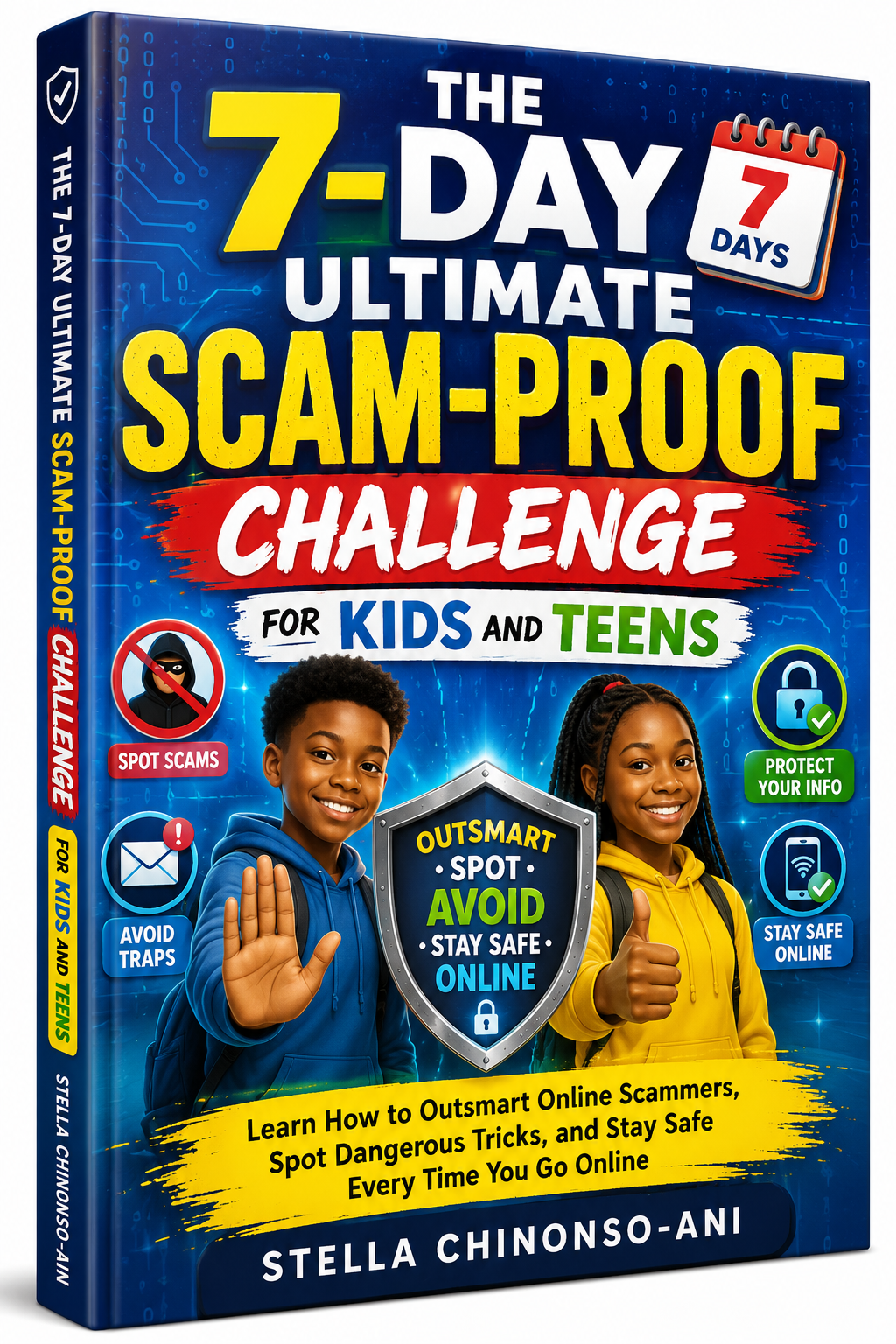
The 7-Day Ultimate Scam-Proof Challenge
for Kids & Teens
A day-by-day guide that teaches your child how to spot the scams actually reaching them today fake prizes, gaming scams, phishing links, and strangers pretending to be someone they're not. Fifteen minutes a day. No lectures. No jargon.

Kids aren't targeted by accident. They're targeted because it works.
Scammers don't need to trick every child just the ones who haven't been shown what a scam actually looks like. Kids and teens are online for gaming, school, and social media for hours a day, which makes them a steady, low-effort target for anyone running a scam.
Sources: Pew Research Center; Thorn; Mass General Brigham EAP; SafeWise Internet Safety Guide. Figures are cited from public research, not collected by us.
Seven short days. One scam type at a time.
Each day takes about 15 minutes and covers one category of scam your child is realistically likely to run into with a real example, a "spot the red flag" exercise, and a simple rule to remember. No fear-mongering. No technical jargon they'll forget by dinner.
Each day includes a hands-on activity like Scam or Safe? Challenge, Spot the Fake Profile, and Real or Fake Challenge plus a Quick Safety Quiz up front to see where your child is starting from.
Four bonuses that come with every copy
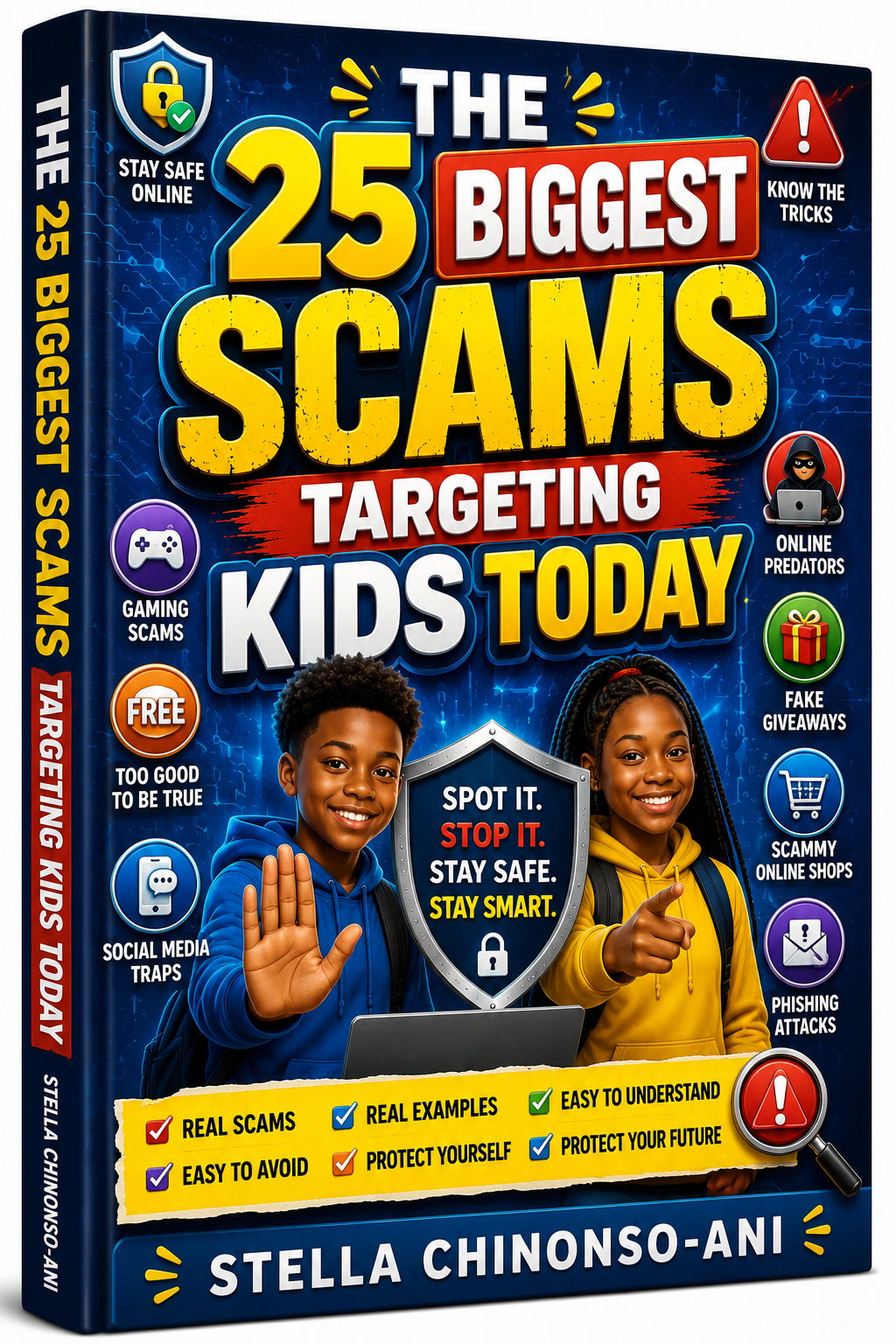
How each scam works, the warning signs, and exactly what to do if your child runs into it.
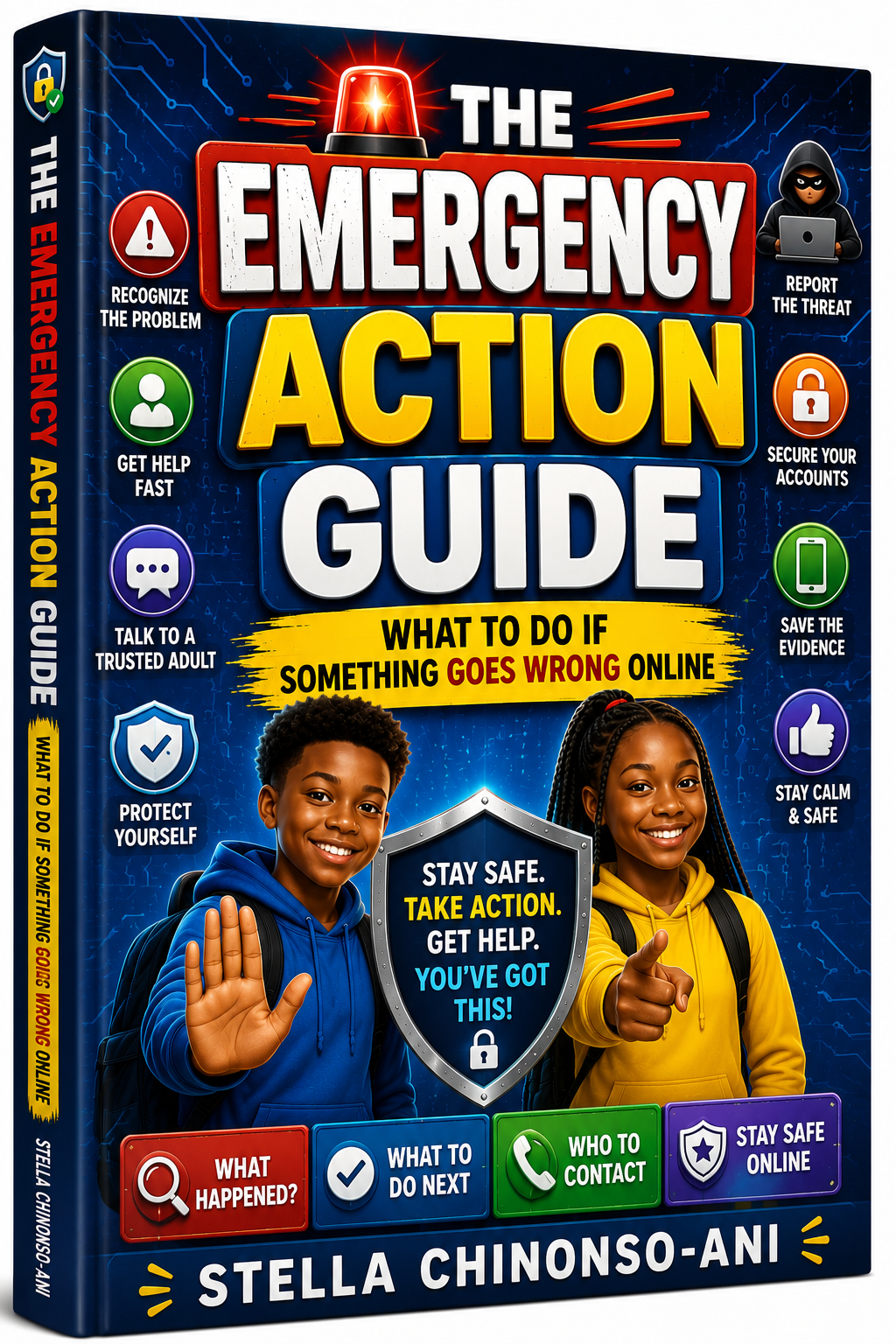
A "what to do if" reference: a bad link was clicked, a password was shared, an account was stolen, a stranger made contact, or they think they've been scammed.
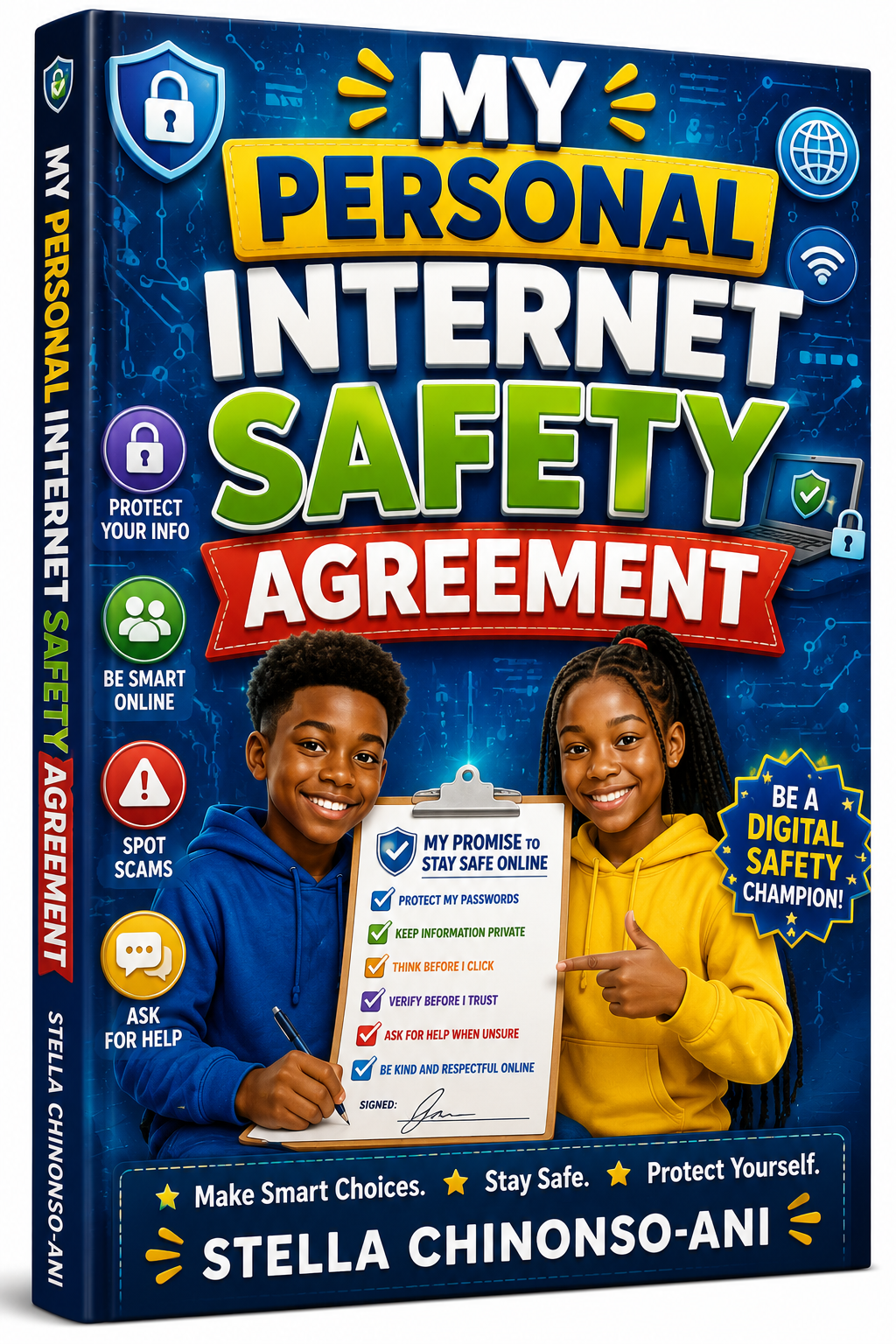
A printable page your child fills in themselves: their online safety promises, gaming rules, social media rules, screen-time goals, and Scam Shield pledge.
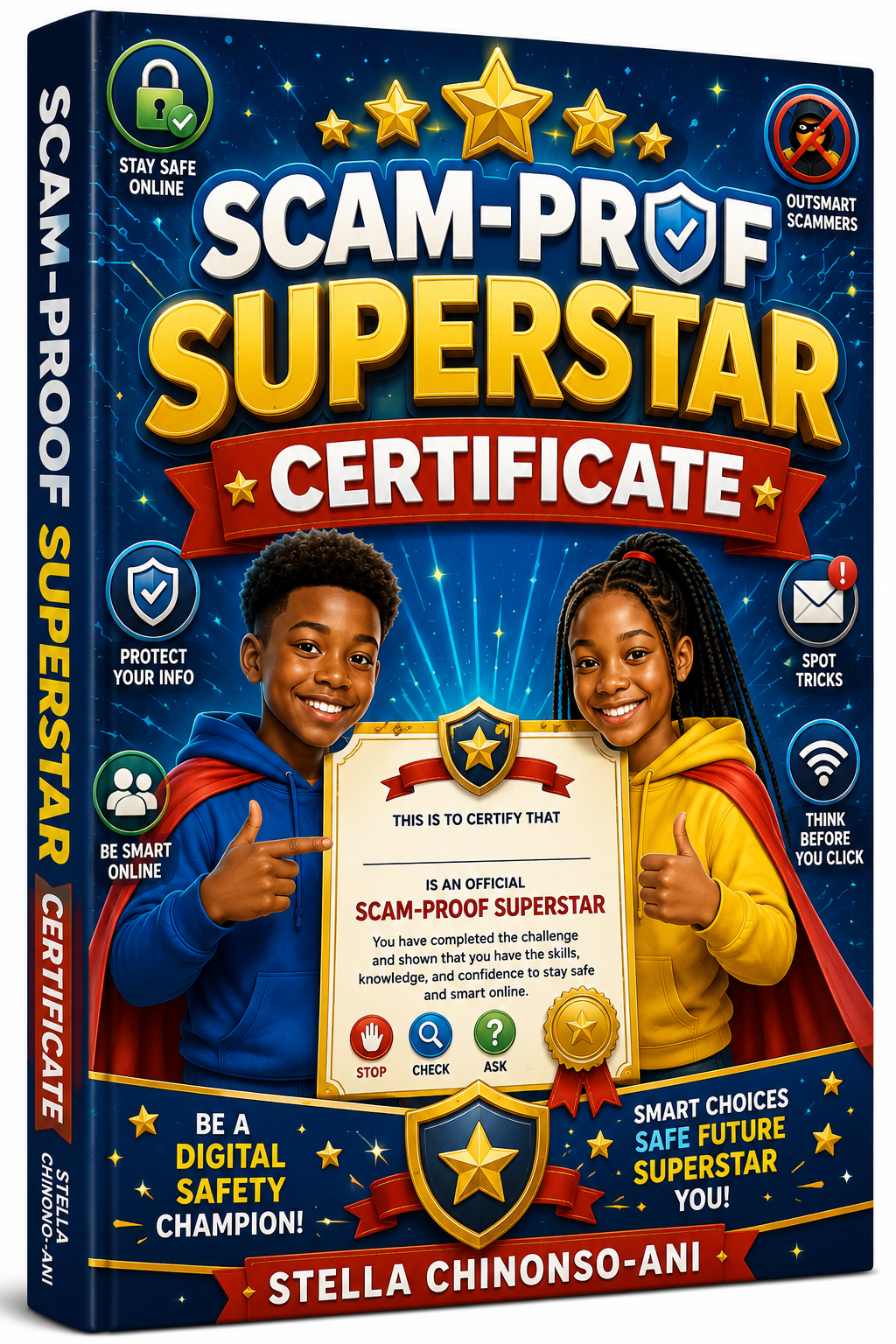
A printable certificate awarded for completing the 7-day challenge and demonstrating the skills to stay smart, safe, and confident online.
What you actually get
Seven short daily lessons, written in plain language a 8–16 year old can read on their own, or with a parent.
A "spot the red flag" exercise for each day, designed to be done in under 15 minutes.
Short prompts to talk through each day's lesson at dinner or bedtime no script required.
For the end of Day 7, kids like finishing something, and this gives them a reason to.
The core rules from all seven days condensed onto a single page to stick on the fridge.
About Stella

I'm Stella Chinonso-Ani, a coding instructor. I'm not a police officer or a cybersecurity researcher. I work with kids and teens regularly, and I got tired of watching them learn about online scams the hard way, after something already went wrong.
This book is built from publicly documented scam patterns, the kinds of things researchers, child-safety organisations, and parents report seeing over and over, turned into a story-driven, day-by-day challenge a kid will actually sit through, without the jargon or the scare tactics.
One guide. One price. No subscriptions.
FAQ
How is it delivered?
It's a PDF. After payment, you'll get a download link by email so you can print it, read it on a tablet, or send it straight to your child's device.
My child is 8, is this too advanced?
The guide is written for the 8–16 range, with the daily lessons kept simple enough for a younger reader and the discussion guide giving parents of younger kids extra prompts to walk through it together.
Does this cover social media and messaging apps specifically?
Yes, Days 2, 3, and 5 focus on the platforms kids actually use: games, chat apps, and social media, since that's where most of these scams happen.
What if my child already knows some of this?
That's normal, and it's fine. The value is in making the knowledge automatic and specific, the worksheets and quiz on Day 7 are there to check it's actually stuck, not just heard once.
Is there a refund policy?
If you download it and feel it isn't right for your family, email the address on your receipt within 24hours and I'll refund you, no back and forth required.
Why does this cost money instead of being free advice?
There's a lot of free scattered advice online. What you're paying for here is the structure, seven organised days, worksheets, and a family conversation guide, put together so you don't have to build it yourself from a dozen articles.