How a Graduate's Painful Realisation Helped Me Turn My Child Into a Tech Creator, In Just 6 Weeks This Summer
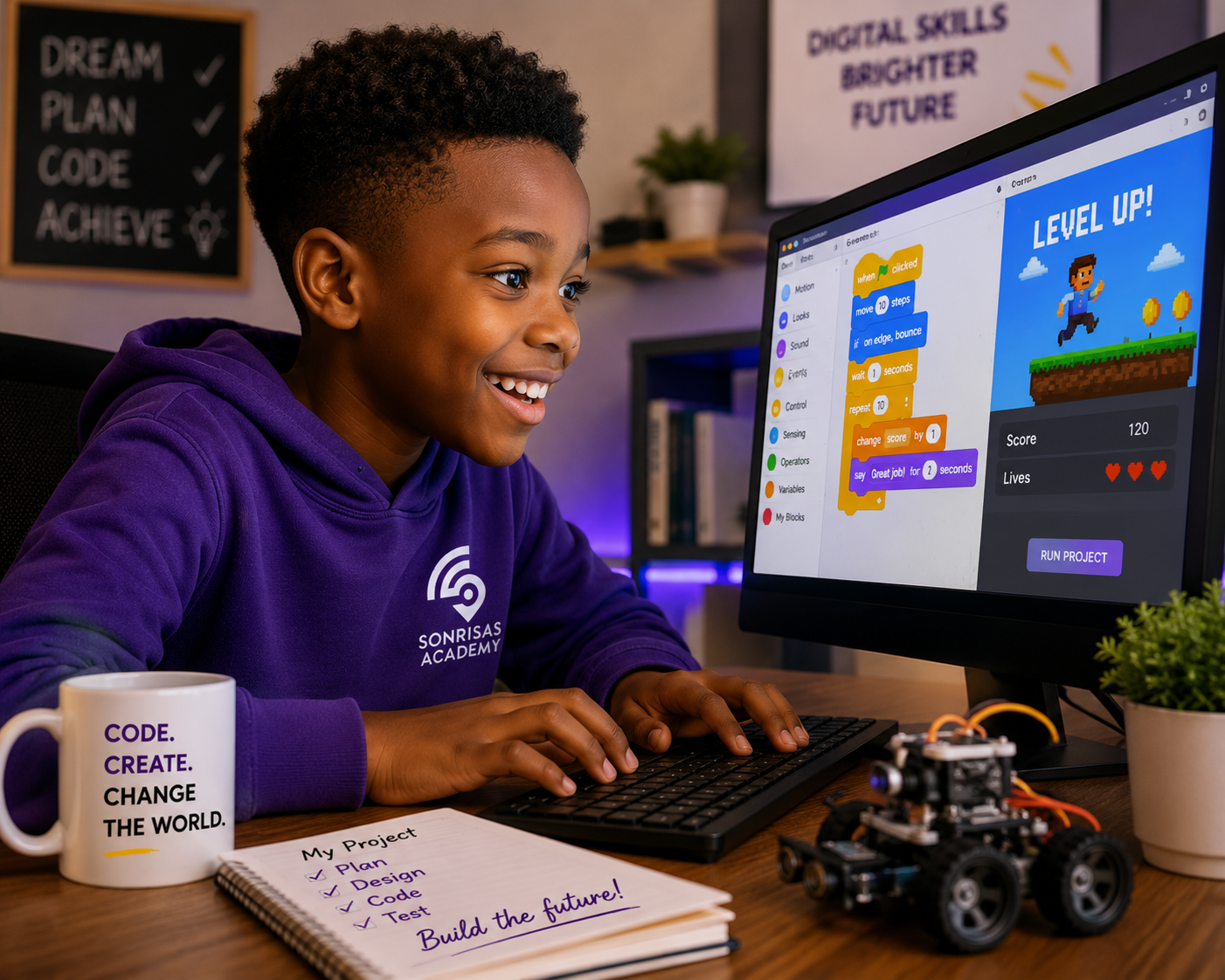
If your child comes home from school, grabs a phone, and disappears for the next five hours — read every word on this page.
If they scroll, swipe, watch, and repeat, day after day, holiday after holiday, and you feel that quiet panic building in your chest every time you try to take the screen away and they look at you like you've stolen the sun from the sky, read every word on this page.
If you've watched other children win competitions, build apps, create games, and speak confidently about technology while yours can operate every device in the house but cannot explain how a single one of them works read every word on this page.
You've tried things. You have.
You bought the educational apps. Your child opened them twice, got bored, and went back to YouTube.
You limited screen time. It became a war. Every evening, a negotiation. Every weekend, an argument.
You enrolled them in holiday lessons the regular kind. Maths. English. Reading comprehension. They did it, yes. But they came back to school September having learned nothing that surprised them. Nothing that excited them. Nothing they ran to tell you about.
Some of you have tried online tutorials. "Go and learn something on YouTube," you said. And they did. They learned how to do the FIFA skill moves. They learned a TikTok dance. They learned nothing that will matter in five years.
Here is the part nobody says out loud.
It is not that your child is lazy. It is not that they are broken. It is not even that technology is the enemy.
The problem is that your child has been trained by every app, every platform, every algorithm to consume. To receive. To watch. And a child who only knows how to receive will grow into an adult who waits. Waits for opportunities. Waits for someone to give them a chance. Waits.
Meanwhile, the children who are learning to create with technology are not waiting. They are building. Designing. Coding. Launching. At thirteen years old. At eleven. At nine.
The gap between your child and those children is not intelligence.
It is exposure. It is structured practice. It is the right environment at the right age.
And every summer that passes without it that gap gets wider.
You feel it, don't you? That's why you're still reading.
"I know this feeling. Because I lived it not as a parent, but as the child who got left behind."
My name is Sonrisas.
I am not a professor. Not a tech billionaire. Not someone who graduated first class and walked straight into a corner office.
I am someone who spent four years studying, passed my exams, collected my degree and then stood at the entrance of the job market and realised, with a cold, slow shock, that nothing I had learned prepared me for what was actually being asked of me.
The real world did not care about my theory. It did not care about my textbook answers. It wanted skills. Practical, demonstrable, digital skills. The ability to build things. To solve problems. To create value from nothing but a screen and an idea.
And I had none of it.
I watched my classmates who had been tinkering with code since secondary school get hired immediately. Some of them before graduation. They were not smarter than me. They were not luckier. They had simply started earlier. They had put in the hours earlier. They had built the confidence earlier.
I had to go back. Self-teach. Spend weekends and evenings catching up on things that other people had already spent years mastering. I had to rebuild myself from scratch, while trying to compete in a market that didn't wait for me to catch up.
It cost me years. Years of frustration. Years of underpayment. Years of being passed over for opportunities that should have been mine, if only someone had given me the right foundation when my brain was sharpest, when my time was most available, when learning was still easy.
That time was school holidays.
That time was summer.
That time, I had spent watching TV.
Years after I rebuilt myself, I went back to speak at a school in Lagos.
The students were about fourteen, fifteen years old. Bright-eyed. Curious. Full of that particular energy that teenagers have when they haven't yet been told what they can't do.
The teacher asked them: "How many of you use a phone or computer every day?"
Every hand went up. Every single one.
"How many of you have ever built anything with a computer?"
Silence. Then three hands. Out of a class of forty-two.
Three.
And that was the moment. That quiet, devastating moment. Forty-two children who touched technology every single day, who were defined by technology in the eyes of their parents, and thirty-nine of them had never, not once, used that technology to create a single thing.
I looked at those children and I saw myself. I saw the version of me that went to university, passed exams, and graduated into confusion. I saw the years I was about to lose. And I felt something I can only describe as an urgency, the same urgency you feel when you see someone about to step off a kerb and a car is coming.
I have never been more certain of anything in my life.
The Discovery That Changed Everything
I went back to that school the following week. I had an old mentor with me, a woman I will call Mama Chukwuemeka, though her students called her Aunty Ngozi. She had spent thirty years in technology education across Africa. She had trained engineers in Ghana, developers in Kenya, animators in South Africa.
She was seventy-one years old and still wrote cleaner code than most people half her age.
She sat with the students for an hour and asked them one question after another. What do you want to do when you grow up? What do you love about technology? What have you made? What have you built? What have you created that didn't exist before you touched it?
At the end, she was quiet for a long time.
Then she turned to me and said five words:
"They are using but not making."
I felt it land in my chest like something solid.
Not a criticism. An observation. The kind of observation that contains the entire problem inside it, simple, undeniable, and once heard, impossible to unhear.
She leaned back and looked at me quietly.
Then she said the thing that unlocked everything:
Here is the thing nobody tells parents.
Technology is not just a subject to study. It is a language. And like all languages, it is learned most naturally, most deeply, most permanently, in childhood.
When a child learns to create with technology early, not just consume it, something shifts in how they think. They stop seeing problems as obstacles and start seeing them as puzzles. They stop waiting to be given things and start building what they need. They stop asking "can I?" and start asking "how do I?"
That shift from consumer to creator is the foundation of every tech career, every startup, every innovation that comes out of Africa and changes something in the world. But it does not happen by accident. It does not happen through unlimited YouTube. It happens through structured, guided, hands-on creation. And it happens most powerfully when the child is young enough to still believe that they can do anything.
I sat with that for a long time after she left.
I thought about every holiday I had spent doing nothing that prepared me for what came after.
I thought about those thirty-nine children in that classroom with their hands down.
And I thought about the children who are in school right now who will be home for the summer in a few weeks who will, unless something changes, spend those weeks the same way I did. Passively. Consumptively. And who will walk back into school in September no closer to the future they deserve.
It took one woman, in a quiet classroom, to show me what was actually happening.
And then I knew exactly what I had to do.
I documented everything Mama Chukwuemeka shared with me. Every framework. Every teaching principle. Every insight about how children learn technology best. I spent months building a curriculum around it tested it, refined it, brought in expert facilitators who combined technical depth with emotional intelligence.
The method is simple. It is structured. It happens live, in a supportive environment, over four weeks of summer. No grinding. No lectures that make children's eyes glaze over. No forcing a child to sit and memorise theory they don't understand.
Just guided creation. Just building. Just the joy of making something that didn't exist before they touched it.
The First Few Days: Nothing Much
I want to be honest with you about what the beginning looks like.
Day 1. The child shows up. Some are excited. Some are skeptical. Some are only there because you made them come and they would rather be watching videos.
Day 2. The concepts start. Logical thinking. How computers actually process information. For some children, this is the first time anyone has explained what is happening behind the screen they touch every day. It surprises them. Some of them go quiet in a way that means they're thinking hard.
Day 3. The first project begins. There is frustration. There is confusion. There is a momen, for almost every child, where they look at the screen and cannot figure out why what they typed is not doing what they expected.
Day 4. Something small shifts. Not a breakthrough. Not a dramatic moment. Just a small thing, a child figures out on their own why something wasn't working. They fix it without being told. They look up with an expression that says: oh. Oh, I see it now.
Day 5: The First Real Sign
By the end of week one, something different is happening in the room.
The children who came in skeptical are now arriving early. Asking questions before the session begins. Showing each other what they discovered.
One child I will call him Taiwo, eleven years old from Abuja, stayed behind on Day 5 to finish a project that wasn't even assigned yet. He was just… building. Because he wanted to see what would happen.
That is the sign. Not a certificate. Not a grade. The sign is when a child does more than they were asked, because they want to.
Day 6. Day 7. Then Something Breaks Open.
Week two is where it accelerates.
The children begin to see themselves differently. They have built something. Something real. Something that functions. A website that actually loads in a browser. A game that actually responds when you press a key. An animation that actually moves the way they designed it to move.
By Day 8, I watched a twelve-year-old girl, Adaeze, shy when she arrived, barely speaking to the other children in week one — stand up in front of the group and walk them through how her project worked. Explaining the logic. Showing the code. Answering questions.
Her mother called me that evening. She was crying. She said: "My daughter came home and spent two hours teaching her younger brother what she learned today. Two hours. She has never done anything like that in her life."
"She has never done anything like that in her life." That sentence. That is why I do this.
But the real test was yet to come.
The Moment That Said Everything
At the end of the programme, each child presents their final project.
Some of them build websites. Some build games. Some create animations or simple applications. But all of them stand up. All of them explain what they made and how they made it. All of them answer questions from their peers.
There is a parent who comes to every presentation. I can see them in the back of the room, filming on their phones, trying not to cry and failing.
One father, a quiet man from Port Harcourt, who told me before the programme began that he wasn't sure his son "had the head for this kind of thing", watched his fourteen-year-old stand in front of the room and demo a fully functional website he had built from scratch.
He didn't say anything for a long time afterward. Then he looked at me and said: "That is not the same boy I dropped here four weeks ago."
"That is not the same boy I dropped here four weeks ago." He said it quietly. Like he was still taking it in.
That is what happens when you give a child the right environment at the right age.
Not just skills. Not just knowledge. A different relationship with what they believe they are capable of.
I Didn't Plan to Tell Anyone Outside Our Students
I told one parent about what we had built.
She told her sister. Her sister told the women in her WhatsApp group. One of those women told another mother at school pickup. And then the messages started coming.
From Lagos. From Accra. From Nairobi. From London. From parents who had been watching their children disappear into screens for years and who had run out of ideas.
Here is what they told me, in their own words.
"My son Emeka is thirteen. Before Sonrisas, I would have described him as technology-obsessed, but in the wrong way. Gaming. Videos. Nothing productive. Three weeks into the programme, he built a simple website for a business idea he had. He asked me to look at it. I sat down and he walked me through every part of it, explaining what each piece of code did. I had to leave the room so he wouldn't see me crying. This is the same child who couldn't sit still for fifteen minutes of homework."
"My daughter Ama had zero interest in anything technical. I enrolled her because I was desperate, honestly, she was spending every holiday doing nothing meaningful. By week two she was calling me to come look at what she had animated. By the end she was talking about a career in tech design. She is eleven. I have never seen her this certain about anything."
"We tried three other holiday programmes before this one. All of them entertained my son but taught him nothing lasting. Sonrisas is different. My son Femi came back home after week one and immediately started explaining coding concepts to his father at the dinner table. His father an engineer, was asking him questions. That did not happen by accident."
"What I noticed first was the confidence. My daughter Zawadi came back from the first week standing differently. Talking differently. She had built something. With her own hands, her own mind, her own effort. And she knew it. The coding skills are wonderful. But the confidence, that is what will carry her."
"My son Ibrahim is twelve. He is dyslexic. I was worried he would struggle. Instead, he thrived. The facilitators were patient and encouraging, they understood that every child learns differently. By the end, Ibrahim had built a game. A functioning game that his brothers now play. He was prouder of that than anything he has ever done in school."
"I raised my nephew Chidi after his parents passed. I always worried about his future, whether I was doing enough. Sonrisas gave him something I could not: the skills and the belief that he belongs in the world of technology. He is fifteen now. He has already started talking about building apps. I have never felt more hopeful for him."
Same curriculum. Same facilitators. Same method. Same results.
Why I Am Sharing This With You
When I went back to Mama Chukwuemeka and told her what had happened, showed her the messages, the presentations, the children who had built things and surprised themselves, she laughed. That particular laugh of someone who expected exactly this.
I asked her if I could take what she had helped me understand and build it into something that could reach children across Africa and the diaspora. Children who would never meet her. Children whose parents were desperately searching for something that actually worked.
She was quiet for a moment.
Then she said:
Sonrisas Academy Summer Tech Class for Kids & Teens
Turning Screen Time Into Skill Time

Everything Mama Chukwuemeka taught me, combined with months of curriculum development, expert facilitation, and real student results, documented and delivered as a live, structured, six-week programme so your child can start building with technology this summer.
Not theory. Not watching someone else build. Your child builds.
- The Core Creation Framework :How computers actually think, how to give them instructions, and the fundamental logic that underlies every programming language on earth. Your child will never look at a screen the same way again. (Module 1)
- Web Design & HTML/CSS Fundamentals : Your child designs and builds their first real website, one that loads in a browser, one they can show anyone, one that is entirely theirs. Step-by-step, with expert facilitation at every point of confusion. (Module 2)
- Game & Animation Building : Using the logic they have already developed, your child creates a functioning interactive project, a game, an animation, or an app prototype. This is where the confidence fully activates. (Module 3)
- The #1 Mistake African Parents Make With Tech Education : Why "just let them explore online" is not a strategy, and what structured guidance actually changes in a child's development. Every parent should understand this before making a decision. (Parent Resource)
- The 10,000-Hour Launchpad : How the programme is specifically structured to give your child maximum skill hours during the period when their brain is most receptive, and how those hours compound over the years ahead. (Module 4 )
- The Digital Confidence Protocol : The specific facilitation approach that ensures every child, including shy children, children who say "I'm not good at maths," and children with learning differences, leaves the programme with genuine confidence, not just certificates. (Embedded throughout)
- Career Pathways in Technology : An honest, age-appropriate introduction to what the tech industry actually looks like, what roles exist, and how children can begin building toward them now. (Week 4 Capstone)
- The Extended Protocol for Advanced Learners : For children who have had some prior exposure to coding or tech concepts, a supplementary track that ensures they are challenged, not bored. (Advanced Module)
You do not need to travel anywhere. The programme is delivered live online, directly to your child wherever they are in the world. Everything required is a computer or tablet and an internet connection. Total cost of materials beyond the programme fee? Zero.
Compare That to What You Have Already Been Spending
₦5,000–₦20,000/year
Your child used it for two weeks, then abandoned it. No structure. No accountability. No real skills built.
₦30,000–₦80,000 per holiday
Teaches your child to pass exams. Does not teach them to build anything. The world has moved on.
₦15,000–₦50,000
One day a week is not enough to build real skill. The momentum never builds before the next session arrives.
₦10,000–₦40,000
Not built for African children. No live facilitation. No one there when your child is stuck. They give up.
₦50,000–₦150,000
Your child has fun. They come home with no new skills, no new confidence, nothing that lasts beyond the camp photos.
Every summer your child spends consuming technology instead of creating with it is another year the gap between them and their future competition gets wider. At some point, that gap becomes very difficult to close. The emotional cost of watching your child struggle in a world they weren't prepared for, that cost is not measurable.
How Much Does the Sonrisas Academy Summer Tech Class Cost?
Let me show you what went into building this programme, because I want you to understand the value before I tell you the price.
Expert facilitators with technical and emotional intelligence training: ₦800,000+
Curriculum development and expert review across multiple tech disciplines: ₦500,000+
Platform and technology infrastructure for live delivery: ₦350,000+
Student project materials and digital resources: ₦200,000+
Testing, refinement, and pilot programme with real students: ₦400,000+
Parent resources and support documentation: ₦150,000+
A fair price for a single child's enrolment, based on what comparable international programmes charge for the same quality and duration, would be ₦200,000.
And honestly, given what your child will walk away with, and what that foundation will mean for the next ten, twenty, thirty years of their life, that is still a bargain.
But I know times are hard. I know that for many families, in Lagos and Accra and Nairobi and London and beyond, every fund has to be justified. I know that "investing in my child's future" is something every parent wants to do but not every parent can do at full price.
So if you enrol today:
Once You Click That Button, Here Is What Happens
- You are taken to our secure payment page. You will see the programme name, the price, and the enrolment details clearly. No hidden charges. No surprises.
- You complete your payment securely. All major payment methods accepted. Takes less than two minutes.
- Within 60–90 seconds of payment confirmation, your enrolment details, including your child's class schedule, joining link, and welcome pack, are delivered directly to your WhatsApp AND email. You do not wait. You do not chase anyone.
It is me, Sonrisas. As long as your payment is confirmed, your child's access is 100% guaranteed. I am personally accountable for that.
What Happens in the First 7–14 Days
Real conversations. Real parents. Real results.
WAIT! I Have Something Special For You…
If you are one of the first 30 families to enrol today, you also receive these two bonuses completely free.
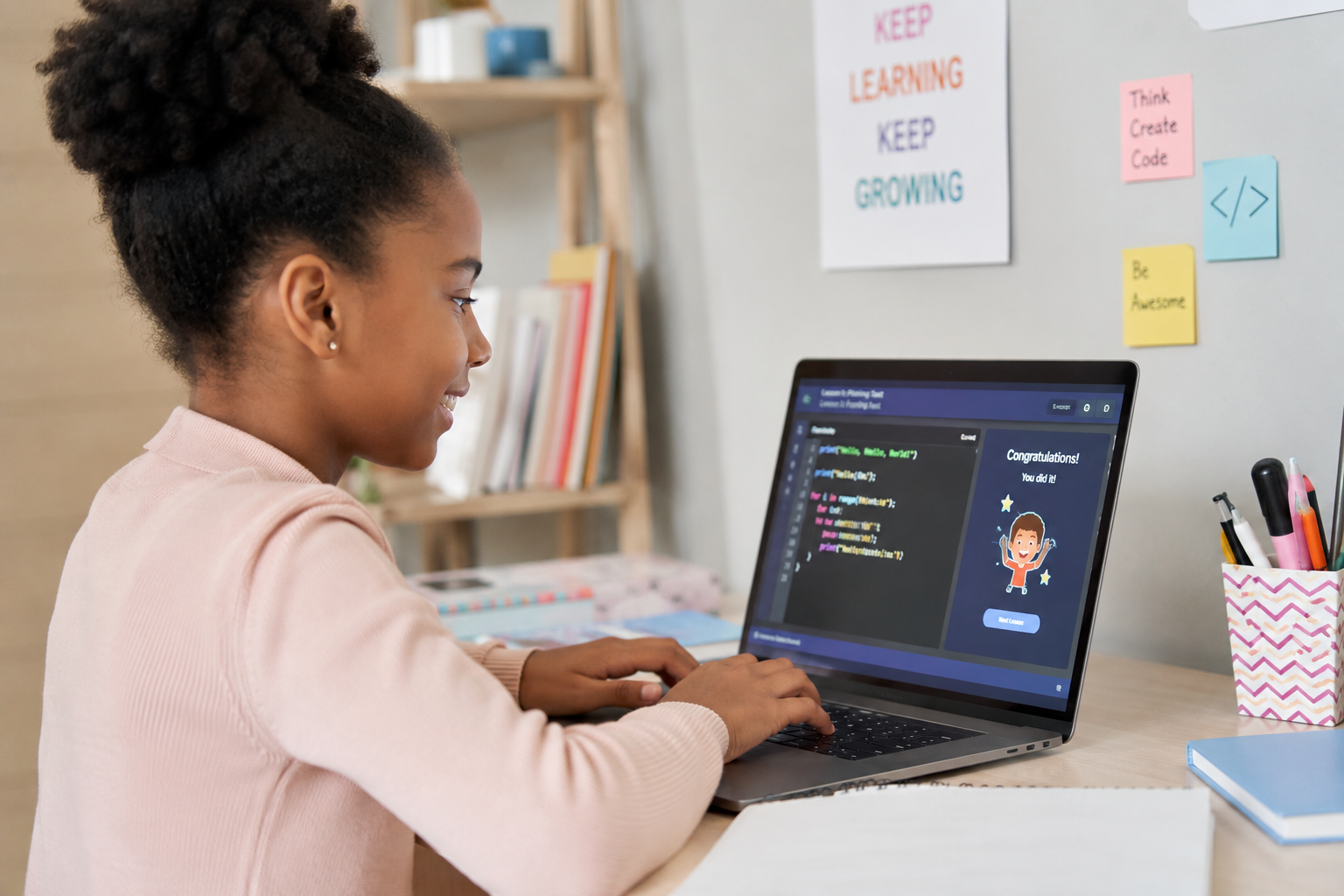
When you register one child, a second child in your family gets to join a separate Sonrisas Academy tech class for free. Two children. Two futures. One investment. This bonus alone is worth more than the price you are paying today.

Four essential books every parent should put in their child's hands before they go online alone. These books teach children how to identify online scams, protect themselves from digital predators, and critically, how to break free from accidental or deliberate exposure to pornographic content online. In today's world, this is not optional knowledge. It is survival knowledge. Your child will read it. It will protect them.
Everything You Are Getting Today

- ✓ Sonrisas Academy Summer Tech Class (6 Weeks, Live) :
₦200,000 - ✓ BONUS 1: Free Second-Child Enrolment :
₦200,000 - ✓ BONUS 2: ScreenWise Kids Book Series (4 Books) :
₦20,000
Total Value: ₦420,000
You Pay Today: ₦80,000
Right Now, You Have Two Choices
If you do nothing…
- This summer passes like the others
- Your child consumes technology for six weeks and builds nothing
- The gap between them and their future competition gets wider
- September arrives and nothing has changed
- You search again next year for something that works
If you enrol today…
- Your child spends this summer creating, not just consuming
- They build real projects, websites, games, animations
- They walk into September with skills, confidence, and proof of what they can do
- They begin the 10,000-hour journey years ahead of their peers
- You stop worrying about whether your child is ready for the future
🛡 30-Day Money-Back Guarantee
Enrol your child. Let them attend the first two full weeks of the programme. Follow the structure. Engage with the facilitators. If after two full weeks of genuine participation you do not see a measurable shift in your child's engagement, skills, and confidence, contact me directly and I will refund every naira. No arguments. No questions. No forms to fill. I am that certain in what we have built.
One Last Thing…
Picture yourself one month from today.
Your child has just presented their final project to the group. A website. A game. Something they built with their own mind, their own hands, their own growing skill.
Will you be the parent sitting in the back of that virtual room, trying not to cry?
Will your child be the one who comes home and spends two hours teaching their younger sibling what they learned?
Will they be the teenager who walks back into school in September different, not just in knowledge, but in how they carry themselves?
Will this be the summer you look back on — years from now, when your child is doing something remarkable, and say: that was when it started?
Now picture yourself one month from today if you close this page.
Same screens. Same hours. Same nothing built. Same child looking at you like a stranger when you ask what they did all day.
The difference between those two versions of your child is a decision you make in the next sixty seconds.
I CHOOSE MY CHILD'S FUTURE! ENROL NOWIf you have read this far and you are still hesitating,
I want to ask you something. And I want you to answer it honestly.
Is it that you don't believe the programme works? You have read the testimonials. You have read the WhatsApp conversations. You have seen real names, real cities, real results.
Or is it that you don't believe your child deserves it?
Because that is often what hesitation really is. Not doubt about the product. Doubt about ourselves. Doubt about whether we are the kind of parent who does this. Whether our child is the kind of child this is meant for. Whether we deserve to invest this much in a future that isn't guaranteed.
Listen to me.
Your child is exactly who this is built for. The child who is "not a technology person." The child who is glued to the screen but has never built a thing. The child who is quiet, or loud, or easily distracted, or laser-focused. All of them. Every one of them has come through this programme and surprised themselves.
If you cannot invest ₦80,000 in your child's future, ask yourself: what are you investing in instead? And is it building the same foundation?
This is not about guilt. This is about clarity.
Stop hesitating. Choose your child.
ENROL MY CHILD NOW, ₦80,000P.S.: The 14-day money-back guarantee is real and it is unconditional. Two full weeks of participation. If you don't see a shift in your child, I refund everything. I am that certain. You carry zero risk.
P.P.S.: There are only 30 spots available at the ₦80,000 enrolment price. Once those 30 families register, the price returns to ₦200,000. I cannot hold spots. I cannot make exceptions. If you come back tomorrow and the price has changed, I genuinely will not be able to help you.
P.P.P.S. : Every day you wait is another day your child spends consuming technology instead of creating with it. The world is not waiting for them to be ready. It is moving forward with or without them. This summer is the time. Today is the day. The decision takes sixty seconds.
Sonrisas
Frequently Asked Questions
How is the programme delivered? My child is not in Nigeria.
The Sonrisas Academy Summer Tech Class is delivered 100% online, live, via video conference. It does not matter whether your child is in Lagos, Accra, Nairobi, London, Houston, or anywhere else in the world. All they need is a computer or tablet, a reliable internet connection, and the desire to learn. The joining link and full schedule are delivered to your WhatsApp and email within 90 seconds of payment confirmation.
What does my child actually need to participate? Is there equipment to buy?
No equipment purchases required beyond what your child already has. A computer (not a phone, the screen size matters for the building activities). A reliable internet connection. That is it. All software tools used in the programme are free and browser-based. There is nothing to install, nothing to pay for beyond the enrolment fee.
My child is very young (or has no tech experience at all). Will they cope?
The programme is designed for children and teenagers aged 6–17, including those with zero prior experience in coding or technology creation. Our facilitators are trained specifically in how to take a complete beginner and build their confidence alongside their skills. Many of the children who have been most transformed by the programme came in believing they "weren't technical people." The programme is also structured to challenge advanced learners — there is an extended track for children who have had prior exposure to coding.
My child has a learning difference (dyslexia, ADHD, autism). Is this programme for them?
Yes. Technology education is one of the fields where children with learning differences often thrive, because it is hands-on, project-based, and rewards pattern-thinking and creative problem-solving rather than rote memorisation. Our facilitators are experienced in supporting diverse learners and will ensure your child is supported, not left behind. Ibrahim, whose story is shared above, has dyslexia. He built a game his brothers now play every evening.
Is the money-back guarantee real? What if I want a refund?
The guarantee is completely real. Enrol your child, attend the first two full weeks of the programme with genuine participation, not casual dipping in and out, and if you do not see a measurable shift in your child's engagement, confidence, and skill, contact Sonrisas directly by WhatsApp or email and a full refund will be processed. No forms. No arguments. No questions. The only condition is genuine participation for two full weeks. That is a fair exchange.
Why is this different from everything else I have tried?
Three things make Sonrisas Academy different. First: it is live and structured. Not a video your child watches alone and abandons. Live facilitators who engage, encourage, and challenge your child in real time. Second: it is creation-focused from day one. Your child builds something every week. Not theory. Not exercises. Actual projects. A website. A game. An animation. Proof of what they can do. Third: our facilitators combine technical expertise with emotional intelligence. They understand not just how to teach coding, but how to teach a child, how to handle frustration, build confidence, and ensure that every child, regardless of starting point, leaves feeling capable.
Comments (247)
I registered my daughter after reading this. The part about thirty-nine children with their hands down broke something in me. That was my daughter. Not anymore. Thank you Sonrisas.
Like (44)The 10,000-hour rule point is what got me. We keep telling our children to study hard without giving them the right thing to study. My son starts this Monday.
Like (31)My husband was skeptical when I showed him this. Then I showed him the WhatsApp testimonials. He said "just register them." Both of mine are enrolled.
Like (58)The bonus about the ScreenWise books alone made me register. Every child who uses the internet needs those books. This package is honestly too good.
Like (72)I graduated in 2019 and spent two years catching up on skills I should have had. I read this article and it felt like reading my own story. My children will not have that problem. Enrolling now.
Like (91)Living in the diaspora and this still speaks directly to me. African children everywhere are dealing with the same gap. The price is very fair for what you're getting. Worth every penny.
Like (38)Leave a Comment